

The birthplace of Scouting in India
Long before it became a familiar sight in schools across the country, Scouting in British India was founded in 1909 — and it began right here, at Bishop Cotton Boys’ School in Bangalore, under Capt. T. H. Baker and Major Pakenham-Walsh. It is a piece of heritage the School holds with particular pride: not merely an early adopter of the Scouting idea, but the very place from which it first took root in the country.
More than a century on, the troop these two men started still meets on the same grounds, carrying forward a simple promise of duty, service and readiness that has shaped generation after generation of Cottonians before they ever leave school.
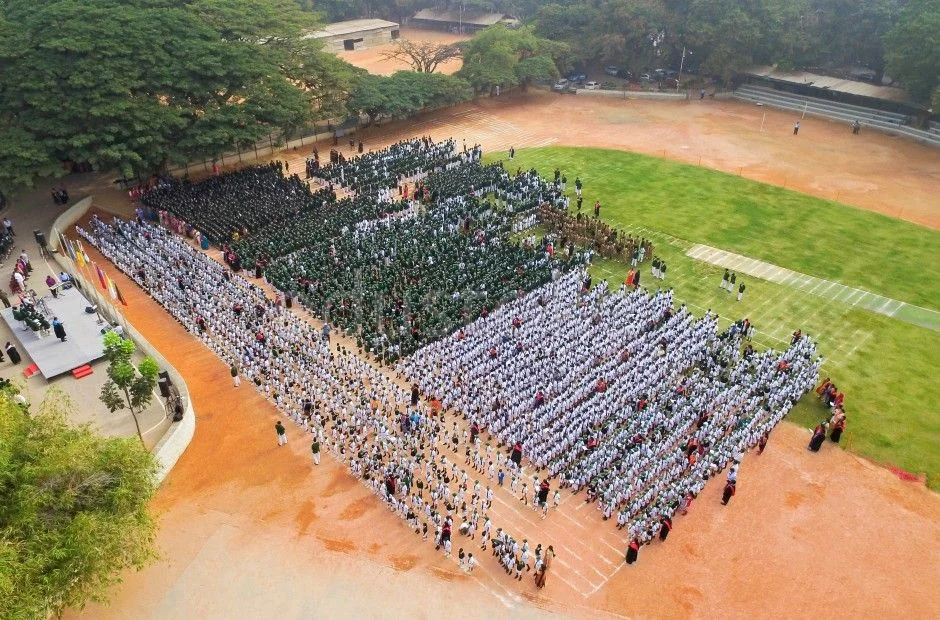
The National Cadet Corps
Alongside Scouting stands the School’s National Cadet Corps contingent, where boys drill, march and train in the habits of a disciplined life. Through regular parade, camp and instruction, cadets learn precision and bearing that cannot be taught from a textbook — punctuality, attention to detail, and the quiet confidence that comes from doing a hard thing correctly, together.
The Corps asks something of every boy who joins it: that he stand a little straighter, arrive a little earlier, and carry himself with the bearing of someone who has taken on a responsibility larger than himself.
Discipline, service, leadership
The uniform is a small thing. What it teaches a boy to become is not.
Discipline
Drill, camp and the routines of Scouting and the NCC instil a bearing, punctuality and self-command that stay with a boy long after he has folded his uniform away for the last time.
Service
Community outreach and service projects teach Cottonians, early, to put their privilege to purposeful use — looking outward, and lending a hand, as a matter of habit rather than occasion.
Leadership
To lead a patrol or a section is to learn responsibility for others before most boys are asked to. It is a quiet, dependable kind of leadership — the kind that does not need to announce itself.
Service has always been central to the Cottonian idea. The distinguished military careers of Old Cottonians — among them Field Marshal Gen. K. S. Thimayya, one of independent India’s most celebrated soldiers — stand as living testament to a tradition of duty that began with a troop of Scouts on this campus in 1909, and which the School continues to hold in the highest regard.